


Calendar
Calendar Date - Agenda App
Calendar is the kind of lifestyle app I reach for when I want one place to see tasks, meetings, and birthdays without turning planning into a project of its own. I tested it as a practical day-to-day organizer rather than treating it like a decorative date viewer, and my impression is straightforward: it is approachable, quick to understand, and most useful when you build a repeatable habit around it. The app is free to start, carries an Everyone age rating, and comes from Calendar Date - Agenda App.
Its store identity is simple, but the useful question is whether it can replace the calendar you already use. In my experience, that depends less on how many appointments you have and more on how consistently you capture small commitments. Someone managing school pickups, work calls, birthdays, errands, and personal reminders may appreciate its direct focus. Someone who needs a deeply integrated team schedule, complex project planning, or a specialist time-management system may find a more advanced alternative a better fit.
Building a dependable daily workflow
Start with one clear view of the day
The most sensible way to use this app is to begin with the events that genuinely control your day. I would add fixed commitments first, such as a meeting, appointment, class, or travel plan, then place flexible tasks around them. That order matters because it prevents a long task list from making the day look more open than it really is.
For birthdays, I prefer entering the occasion as soon as I remember it rather than waiting until the week before. A birthday is not a task that disappears after one notification; it is a recurring part of a personal calendar. Treating it as a date to prepare for, rather than merely a date to notice, makes the app more useful. I can then leave myself enough room to buy a gift, write a message, or arrange a visit.
The same approach works for household responsibilities. Instead of writing one vague entry such as “sort out the weekend,” I would separate the practical actions into manageable items. A calendar is easier to trust when each entry tells me what needs attention and when, rather than forcing me to reconstruct the plan from a general note.
Related News

Why WhatsApp Messenger Still Makes Everyday Communication Feel Easy

Jurassic World: The Game Is the Better Dino Tycoon for Strategic Players

Threads in Real Life: Who Should Join, Lurk, or Leave

How SHEIN Turned Shopping Into an Endless Content Feed

How to Make Fortnite Feel Smarter on Mobile

Should You Switch to Microsoft Outlook on Mobile?
A realistic weekday example
Imagine a Thursday with a morning appointment, a work meeting later in the day, and a family birthday that evening. I would use the fixed events to establish the shape of the day, then add preparation tasks before them. A reminder to leave home belongs before the appointment, while a reminder to pick up a card belongs early enough to be useful. The birthday itself stays visible as the important event, not buried among errands.
This is where I noticed a practical strength: the app encourages me to distinguish between something that happens and something I need to do. That small separation improves planning. “Dentist” is an event; “bring paperwork” is a task connected to it. Keeping those ideas separate makes the schedule easier to scan and reduces the chance that a preparation step will be forgotten.
Keep the calendar readable
One mistake I would avoid is adding every thought immediately as a full calendar event. If the schedule becomes crowded with minor ideas, the genuinely important appointments lose visual weight. I get better results by reserving the calendar for time-sensitive commitments and using tasks for actions that can move within the day.
Gallery
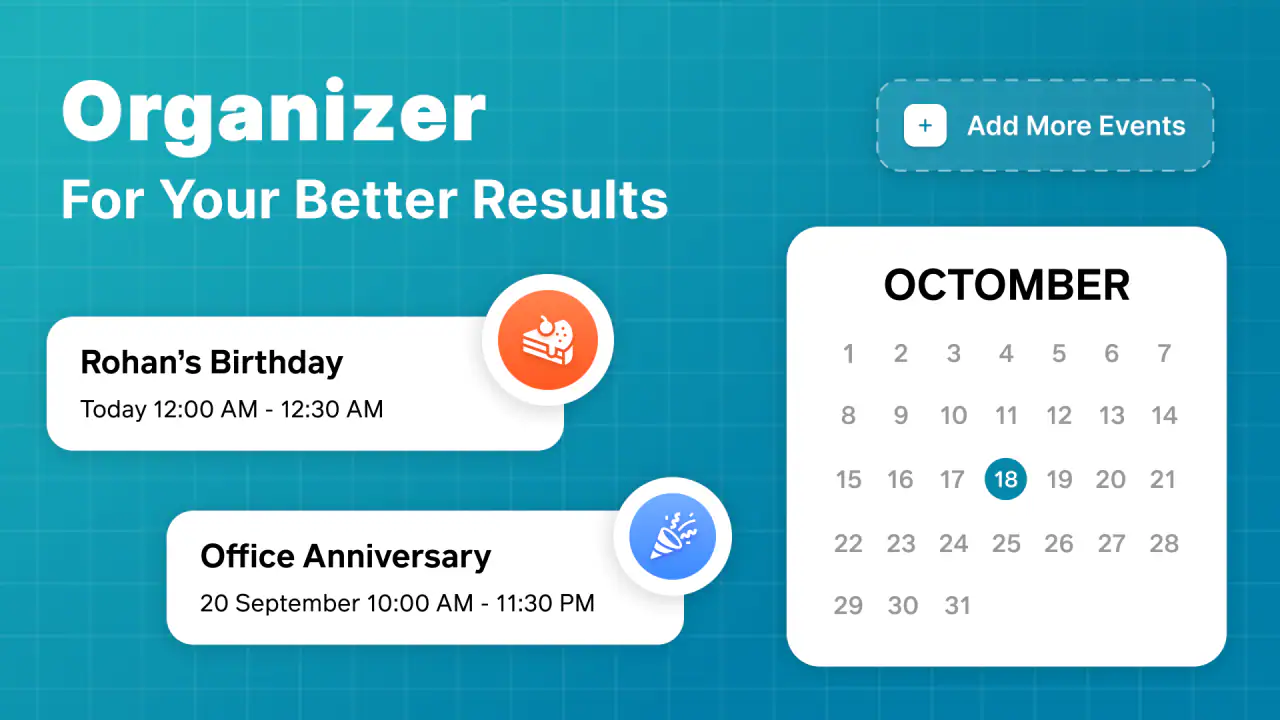
I also recommend reviewing the next day before going to bed. This takes only a short moment, but it exposes conflicts while there is still time to adjust them. If two items overlap, I can decide whether one should move, whether I need travel time, or whether the task should be removed entirely. The app becomes more valuable when it supports that small review habit instead of being opened only after something has already been missed.
Settings worth checking before relying on it
Before making Calendar the center of my routine, I would spend time checking the available settings and display choices. The exact options that matter most will depend on how I use the app, but the principle is universal: a calendar should show useful information at a glance without making every day feel noisy.
I would first look for date and time preferences, notification behavior, and any choices affecting the way events are displayed. A reminder that arrives too early becomes background noise, while one that arrives too late is practically useless. The right timing depends on the event. A short appointment may need a modest prompt, while a birthday preparation task deserves more lead time.
I would also check whether the app opens in the view I actually use most. If I plan by individual days, a daily view may be less distracting than a broad monthly overview. If I mainly need to spot busy periods, the month view may be more efficient. The best setting is not the one that shows the most information; it is the one that answers my usual planning question fastest.
Use repetition carefully
Recurring entries are valuable for habits, regular meetings, and birthdays, but they should be used with discipline. A repeated event can save time, yet an outdated recurring item can quietly clutter every future week. I would create repeats only for commitments that are genuinely stable, then review them whenever a routine changes.
This is particularly important for tasks that sound permanent but are actually temporary. A weekly shopping reminder may be helpful for a month, but keeping it active indefinitely can train me to ignore it. I prefer reviewing repeated items at the end of a season, after a job change, or whenever my household routine shifts.
What the app is like to live with
Calendar is aimed at ordinary personal organization rather than specialist scheduling. That focus is a benefit when I want a clean, familiar planning tool. I do not need to learn a complicated project system before adding an appointment or birthday. The trade-off is that people who expect extensive collaboration, detailed task dependencies, or a full work-management environment may find the experience too limited.
The app has reached a 4.4 average from around 11 thousand ratings, with over a million installs, so it clearly appeals to a substantial audience. I would treat that as useful context rather than a guarantee. A popular calendar may still be wrong for someone whose workflow depends on shared workspaces or advanced integrations.
Faster patterns for experienced users
Once the basic workflow feels natural, speed comes from reducing decisions. I try to enter each item with a clear purpose, a useful time, and wording that will still make sense when I see it later. “Call school” is more actionable than “school,” and “send invoice” is easier to interpret than “admin.” Clear labels reduce the need to open an entry just to remember what I meant.
I also batch similar planning work. Rather than interrupting a busy morning for every minor reminder, I can spend a few minutes entering the week’s appointments, birthdays, and errands in one sitting. This creates a more coherent schedule and makes it easier to notice clashes between commitments.
A second useful pattern is to plan backward from important events. If a birthday is on Saturday, I would not wait until Saturday to think about it. I might create a preparation task earlier in the week and keep the actual birthday visible separately. For a meeting, I might add a document-preparation task before the meeting and a follow-up task afterward. This turns the calendar from a record of appointments into a lightweight sequence of actions.
Use names that survive a busy week
Short titles are faster to read, but overly short titles create confusion. I would include the person, purpose, or place when it changes the meaning. “Call Alex about lease” is more useful than “Call Alex,” especially when several calls are planned. Similarly, “Pick up prescription” gives me a clear action, while “Pharmacy” may only identify a location.
This habit becomes especially useful when reviewing a crowded month. I can understand the schedule without opening every item. It also helps when I postpone something, because the wording still tells me what the task is about rather than merely reminding me that an unnamed obligation exists.
Separate planning from memory
I would not use every calendar entry as a storage place for information. A date and time are excellent for deciding when something happens, but they are not always the best place for detailed notes. If an entry needs a long explanation, I would keep the title focused and use whatever supporting detail the app allows without turning the event into a paragraph.
This distinction prevents a common problem: a calendar that technically contains everything but is too difficult to scan. The schedule should answer “what is happening and when?” quickly. Supporting information should help me act, not make the entry harder to understand.
Handling birthdays without clutter
Birthdays deserve their own approach because they are important but usually not time-specific in the same way as meetings. I would keep the birthday event visible, then add separate preparation tasks only when needed. That avoids filling the calendar with unnecessary annual reminders while still giving me a way to plan a card, gift, or message.
For people close to me, I might create a preparation reminder several days earlier. For a casual acquaintance, the birthday itself may be enough. This is a small but meaningful trade-off: not every date deserves the same amount of planning space, and the app works better when I adjust the detail to the relationship.
Where the simple approach starts to show limits
The main limitation is that a personal calendar cannot solve every coordination problem. If several people need to edit the same schedule, assign responsibilities, or track progress through a large project, I would look toward a collaborative planner or task-management platform. Calendar can help me remember a deadline, but it is not automatically a substitute for a shared workspace.
I would also be cautious about using it as my only tool for complicated travel or multi-stage projects. A calendar can show departure times and reservations, but a detailed itinerary may be easier to manage in a dedicated travel app or document. Likewise, someone who needs time tracking, dependencies, or extensive categorization may outgrow this app even if its everyday interface remains pleasant.
Another trade-off concerns paid features. The app is free, but in-app purchases range from $4.99 to $25.99 per item. That does not make the free starting point unattractive, but I would review what is included before committing to a paid upgrade. For a person who only needs basic personal scheduling, the free experience may be enough. Someone considering extra capabilities should decide based on a real recurring need, not on the assumption that more options will automatically improve organization.
Compatibility and choosing the right device
The current version is 4.5, and the app requires Android 8.0 or later. That makes it accessible to many Android users, although anyone with an older phone should check compatibility before planning a complete switch. I would also consider where I naturally manage my schedule. If most planning happens on an Android phone, the app can fit comfortably into that routine; if I move constantly between different platforms, I would compare its convenience with a calendar already built into my wider device ecosystem.
That comparison is important because the usual alternatives have different strengths. A phone’s built-in calendar may offer smoother integration with contacts, accounts, and system reminders. A dedicated task manager may handle priorities and checklists better. A paper planner may be calmer for people who enjoy writing and do not need alerts. Calendar sits in the middle: more structured than a notebook, less specialized than a full productivity suite, and easier to approach than a complex planning system.
Who should use it and who should skip it
I think Calendar is a good choice for students, families, freelancers, and anyone who wants a straightforward way to organize appointments, tasks, and birthdays. It is especially suitable for people who have tried to remember everything mentally and now need a visible routine without learning a demanding system.
I would recommend skipping it if your main requirement is team scheduling, shared project ownership, or detailed task analytics. It may also be a poor fit if you dislike notifications altogether or prefer a calendar that is deeply tied to an existing account ecosystem. In those cases, the familiar alternative may save more effort than changing tools.
My verdict after building a repeatable habit
My final view is that Calendar succeeds when I use it as a dependable personal dashboard rather than expecting it to become an all-purpose productivity platform. The strongest results come from a few repeatable habits: add fixed events first, give tasks clear names, plan preparation before important dates, review recurring entries, and check the next day before it begins.
It is a free lifestyle app with an Everyone rating, developed by Calendar Date - Agenda App, and its broad adoption makes it easy to take seriously. Still, the real reason I would recommend it is simpler: it lowers the effort required to keep ordinary commitments visible. The best feature is the routine it encourages: capture, review, adjust, and move on.
If your schedule is personal and moderately busy, I think this is worth trying. If your life depends on shared calendars, complex workflows, or specialist project controls, I would choose a more powerful alternative instead. For everyone in between, Calendar offers a practical middle ground, provided you keep the entries focused and make the short daily review part of your routine.
FAQs for Calendar
What features does the Calendar app offer?
The Calendar app provides a variety of features including event scheduling, reminders, integration with other apps like email and maps, and customizable views (daily, weekly, monthly). It also supports shared calendars for collaboration and offers notifications for upcoming events. Users can sync across devices, ensuring seamless access to their schedules.
Is the Calendar app compatible with both Android and iOS devices?
Yes, the Calendar app is designed to be compatible with both Android and iOS devices. It allows users to sync their calendars across different platforms, making it easy to manage schedules regardless of the device being used. This cross-platform support ensures flexibility and accessibility for all users.
Does the Calendar app require an internet connection to function?
While an internet connection enhances the functionality of the Calendar app, especially for syncing events and accessing shared calendars, it can still be used offline. Users can view and edit existing events without connectivity, and changes will sync automatically once an internet connection is re-established.
How does the Calendar app ensure user privacy and data security?
The Calendar app employs robust security measures to protect user data. It uses encryption to safeguard information and adheres to privacy regulations. Users can control who sees their calendars and events, and the app offers options to manage permissions and access levels for shared calendars.
Are there any costs associated with using the Calendar app?
The Calendar app is typically free to download and use. However, some advanced features or integrations may require in-app purchases or a subscription. Users should check the app store description for any potential costs and consider if the premium features align with their needs before purchasing.
Pros
- Intuitive user interface for easy navigation.
- Seamless integration with other productivity apps.
- Customizable alerts for important events.
- Syncs across multiple devices effortlessly.
- Supports various calendar views for flexibility.
Cons
- Limited color options for event categorization.
- Requires internet for full functionality.
- No advanced task management features.
- Ads can be intrusive in the free version.
- Premium features locked behind a paywall.


